PROJECT REF NLV-2026 · ENERGY-INTENSIVE INDUSTRIES SEZ PERSIAN GULF, IRAN

The Project

Three phases, one complete value chain

From crude separation to petrochemical products, each phase builds on the one before and brings revenue and capability forward for the next.

150,000bbl/day feed, light and heavy crude
3Execution phases
Parsian SEZHormozgan Province
70 / 30Light / heavy crude, % of feed

Phase 1

Crude processing and fuel upgrading

This phase covers crude distillation and treatment, bringing the refinery's main fuels, LPG, naphtha, jet fuel, gasoil and fuel oil, up to the required standards. It also builds the core refinery infrastructure, including all utilities, offsites, and feed and product storage tanks.

Objectives

  • Base fuel products that can be marketed at the lowest capital cost
  • Early revenue and cash flow to help finance the later phases
  • A shorter construction period and lower investment before production starts

Main products

NaphthaGasoil (diesel)Fuel oil

Process units

Crude distillationVacuum distillationNaphtha splitterNaphtha hydrotreaterGasoil HDSLPG recoveryLPG sweeteningKerosene hydrotreaterMild hydrocrackerHydrocrackerAmine unitSulphur recoveryHydrogen productionSour water treatmentCatalytic reforming (CCR)Utilities & offsites (55% of final capacity)
Phase 2

Heavy-residue upgrading and polymers

A fluid catalytic cracking (RFCC) unit converts heavy vacuum residue into lighter, higher-value products, including LPG, gasoline, propylene and polypropylene. The propylene produced feeds a dedicated polypropylene unit, adding further value to the phase.

Objectives

  • More light, higher-value fuels such as gasoline and quality diesel
  • Less low-value fuel oil produced and sold
  • Meeting the feed-breathing law's requirement to produce propylene

Main products

GasolinePolypropylene

Process units

RFCCCracked-gasoline hydrotreaterPolypropylene (300 kta)Utilities & offsites (20% of final capacity)

Phase 3

Petrochemicals

Refining is integrated with petrochemicals in this phase, producing benzene, toluene, para-xylene and ortho-xylene, styrene, polypropylene, polyethylene and butadiene — extending the value chain from the refinery's reformate and light naphtha into a full slate of petrochemical products and opening the way to global markets.

Objectives

  • Use refinery products to develop petrochemical units
  • Reduce dependence on the fuel market
  • Diversify the product basket

Main products

Aromatics (benzene, toluene, xylene)Polyethylene (LLDPE)Polypropylene

Process units

BTXOlefins (incl. butadiene)LLDPEPolypropylene (160 kta)Ethylbenzene and styreneUtilities & offsites (25% of final capacity)

Digital transformation

A smart refinery by design

Negin Lavan aims to be a smart refinery by design. Its Industry 5.0 programme plans to bring these technologies, alongside modern refining technology, to raise productivity, safety, sustainability and transparency across the energy value chain. The aim is to lead the digital transformation of the energy industry.

Artificial intelligence & machine learning

Process optimisation, prediction and decision support.

Internet of Things (IoT)

Connected sensors and equipment across the complex.

Blockchain & distributed ledger

Transparent, traceable records across the value chain.

Cloud computing

Shared, scalable digital infrastructure.

Big data & analytics

Turning plant and market data into decisions.

Augmented reality (AR)

Guided operations and maintenance.

Virtual reality (VR)

Training and design review.

3D printing

Faster spare parts and prototyping.

Automation & digitalised processes

Digital workflows from engineering to operations.

Digital supply chain

End-to-end visibility and coordination across suppliers and logistics.

Human-machine interface (HMI)

Intuitive operator interfaces for safer, faster decisions.

Digital simulation & modelling

Virtual models to test and optimise operations before they run.

Intelligent decision support

Data-driven recommendations for operations and management.

Digital thread & lifecycle management

Connected data from engineering through operations and maintenance.

Feed

Where the crude comes from

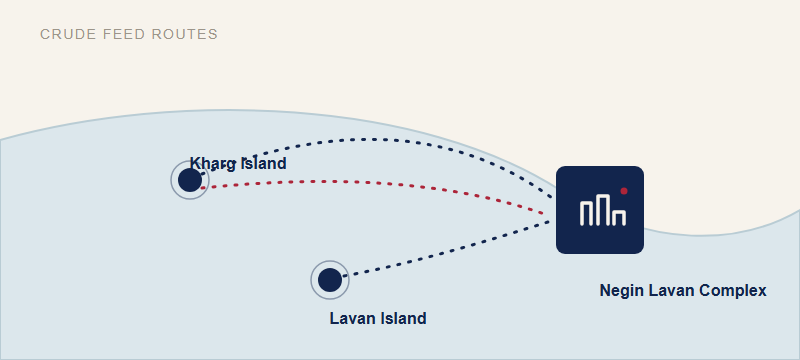
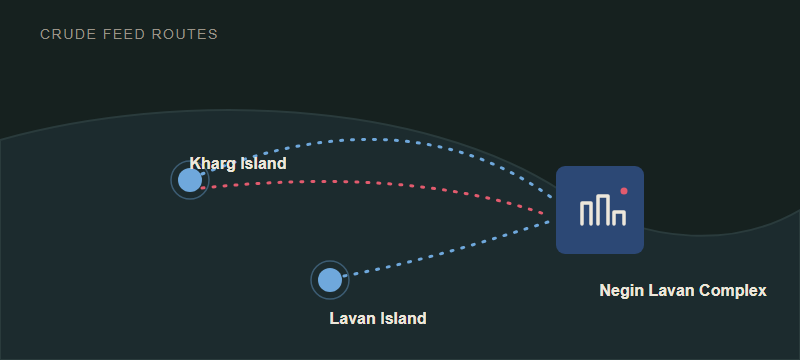
The complex is designed for 150,000 barrels a day: 70% light crude (105,000 bbl/day, from Lavan and Kharg islands) and 30% heavy crude (45,000 bbl/day, from Kharg Island). The Ministry of Petroleum issued the crude feed allocation licence in December 2024 under the downstream law.

Map of crude feed routes: light crude from Lavan and Kharg islands, heavy crude from Kharg, to the Parsian zone Map of crude feed routes: light crude from Lavan and Kharg islands, heavy crude from Kharg, to the Parsian zone

Legal framework

Incentives under the downstream-industries law

The project is carried out under the law supporting the development of downstream crude oil and gas condensate industries with public investment.

Feed breathing

Free feed up to the approved investment value, repaid later from product sales. It applies once operation reaches at least 80% of nominal capacity.

10% feed discount

A ten percent discount on feed prices for ten years.

100% export licence

Permission to export all products.

Pre-sale of products

Up to 50% of investment cost can be financed by pre-selling products.

13-year tax exemption

Tax exemption for thirteen years in the special economic zone.

Sea access

Open-water access and proximity to target markets, with the zone's infrastructure on site.

Where the project stands

Read how the company was formed, who owns it and where the project is located.

About the company